

If you’ve been building 80% pistols, you already know: Polymer80 shutting down in 2024 left a lot of us wondering what’s next.
P80 was the name in 80% Glock frames for over a decade. It’s where most of us started. And when they closed their doors, it felt like the end of an era.
But here’s the thing: the 80% world didn’t stop. It evolved.
G80 by Defense Distributed has stepped into the gap with some serious improvements: steel construction, smarter engineering, and a design built specifically for today’s regulatory environment.
Whether you’re a P80 veteran looking for your next build or someone just getting into 80% pistols, you need to know how these two stack up. This guide breaks down exactly what changed, what’s better, and why G80 might be the upgrade you didn’t know you were waiting for.
What Happened to Polymer80?
Let’s start with some context.
Polymer80 basically created the mainstream 80% pistol market. From 2013 to 2024, they were the standard. If you wanted to build your own Glock-compatible pistol at home, P80 was the answer. They made it accessible and achievable for everyday enthusiasts.
Then came the lawsuits. And the regulatory pressure. And more lawsuits.
By August 2024, it was over. Polymer80 shut down, and thousands of builders lost access to technical support, warranty service, and replacement parts overnight. If you had a half-finished build sitting on your bench, you were suddenly on your own.
But here’s the silver lining: that gap in the market forced innovation.
New players had to step up, and they had to do it better. They couldn’t just copy what P80 did. They needed to build something designed for the current environment, not the one from 2013.
That’s exactly what G80 did.
Meet G80: Built for What Comes Next
So who’s behind G80? Defense Distributed, a name you probably recognize if you’ve been paying attention to firearms accessibility over the past decade.
What makes G80 different isn’t just that it exists. It’s how it was designed.
G80 was engineered after the VanDerStok Supreme Court ruling in March 2025. That’s not a small detail. The entire system was built with current regulations in mind from day one, not retrofitted or adapted, but purpose-built.
The Steel Difference
Here’s where things get interesting.
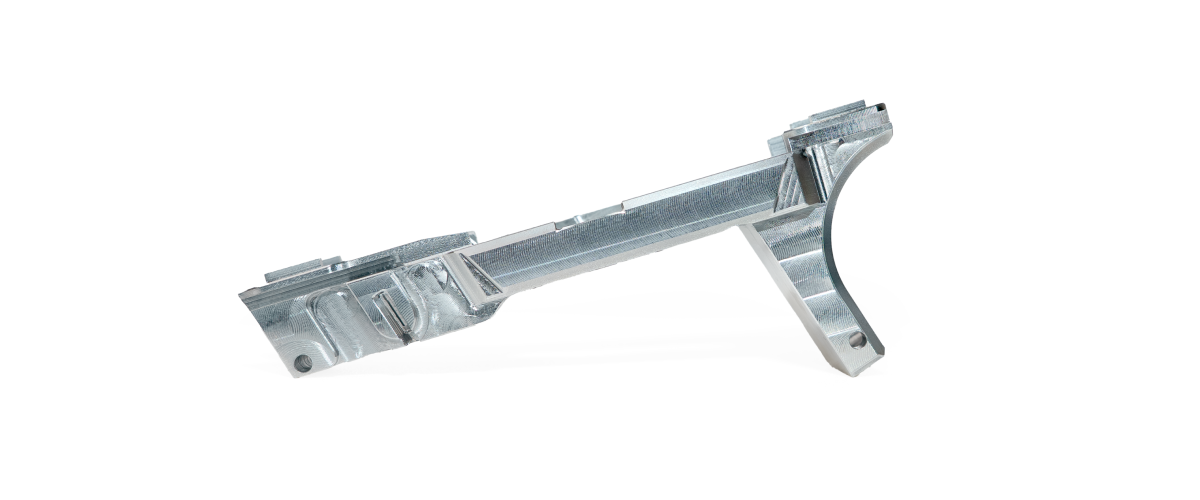
Instead of an all-polymer frame like P80, G80 uses a 4140 steel fire control unit with a nitride finish. That’s the same steel used in quality barrels and bolts.
What does that mean for you?
- Zero flex under recoil. Steel doesn’t care how many rounds you put through it.
- Virtually unlimited service life. You’re not going to wear this out.
- Tighter tolerances. Steel machines more precisely than polymer.
Monolithic Construction
P80 builders know the drill: locking block rail, rear rail module, careful alignment, and hoping everything lines up with your slide.
G80 takes a different approach. The design is monolithic, with no separate rail sections to align. The rails are integrated into the steel FCU.
That means no more fighting tolerance stacking when you’re trying to mate an aftermarket slide. The fit is tighter out of the box.
Compatibility You Can Count On
Worried about parts compatibility? Don’t be.
G80 works with Glock 19 Gen 3 components, the same parts ecosystem you’re probably already familiar with. OEM or quality aftermarket, your slides, barrels, and trigger assemblies will work.
Plus, it’s compatible with the open-source 120R grip system, giving you customization options that weren’t possible with P80’s fixed grip angle.
Standard holster compatibility? Maintained.
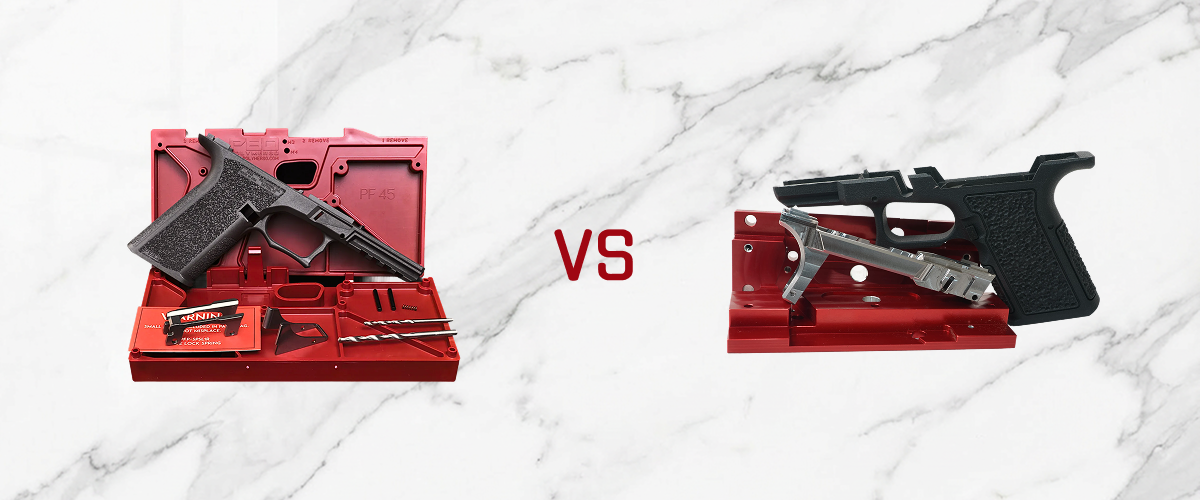
Polymer80 vs G80: Head-to-Head Comparison
Alright, let’s get to what you came here for: the direct comparison.
Frame Material
Polymer80: All-polymer construction. Lightweight, sure. But some builders experienced stress cracking around the frame rails after thousands of rounds. Polymer can also flex under recoil, which affects shot-to-shot consistency.
G80: 4140 steel fire control unit with nitride finish. Heavier, yes. But zero flex, no stress cracking, and a service life measured in “basically forever.”
What it means for you: If you’re building something you want to last, and shoot hard, steel is the answer.
Rail System
Polymer80: Multi-piece design with separate locking block rail and rear rail module. Alignment was critical. Get it wrong, and you’re fighting your build the whole way.
G80: Monolithic design with integrated rails. No alignment headaches. No tolerance stacking issues.
What it means for you: Less frustration during the build, better results after.
Jig System
Polymer80: Single-use jig. Make a mistake? Buy a new kit.
G80: Infinitely reusable jig with included tooling. Mess up? Start over. No additional purchase required.
What it means for you: More room to learn, less pressure to be perfect on the first try.
Legal Compliance
Polymer80: Designed before the current regulatory environment. Faced constant legal challenges that ultimately contributed to their closure.
G80: Purpose-built for VanDerStok compliance. Designed after the ruling, not adapted to it.
What it means for you: Peace of mind knowing the system was engineered for today’s rules. (Always check your state laws, more on that below.)
Quick Comparison Table
| Feature | Polymer80 | G80 |
|---|---|---|
| Frame Material | Polymer | 4140 Steel FCU |
| Rail Design | Multi-piece | Monolithic |
| Jig Reusability | Single-use | Infinite |
| Gen Compatibility | Gen 3 | Gen 3 |
| Designed for Current Regs | No | Yes |
What You Need for a G80 Build
Ready to actually build one? Here’s what you’re looking at.
Tools
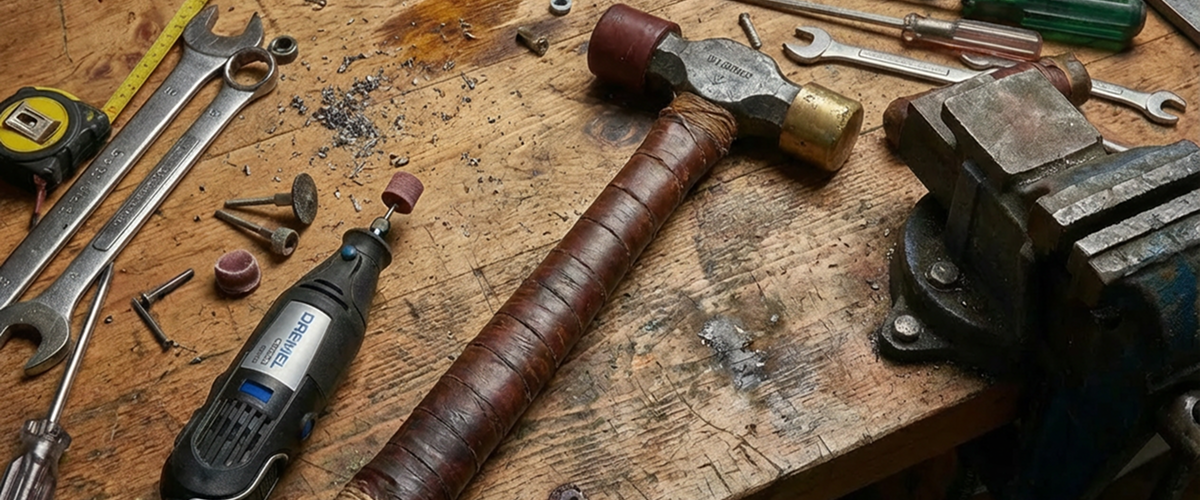
G80 includes essential tooling with the kit, which is a nice touch. But you’ll still need to supply:
- Dremel (for finishing work)
- Drill press or milling machine (for precision cuts)
- Basic hand tools
- Patience (seriously, don’t rush it)
Parts
You’re building on the Glock 19 Gen 3 platform, so you’ll need:
- Slide (complete or build your own)
- Barrel
- Trigger assembly
- Slide parts kit
- Magazine
OEM parts work great. Quality aftermarket works great. Just avoid the cheapest no-name stuff if you want reliability.
Want to customize your grip angle or texture? The 120R grip ecosystem gives you options.
Build Complexity
If you’ve completed a P80 build before, the process will feel familiar. The monolithic design actually simplifies some steps, since no rail alignment means fewer opportunities to mess things up.
First-time builder? Expect a few hours for a careful build. Take your time. Watch the tutorials. Read the documentation. It’s not a race.

Is This Legal? Understanding Current Regulations
Let’s address the elephant in the room.
The VanDerStok Ruling
In March 2025, the Supreme Court upheld the ATF’s authority to regulate certain firearm kits under their 2022 frame/receiver rule.
Here’s what that doesn’t mean: 80% builds aren’t banned.
Here’s what it does mean: the line between what’s a “firearm” and what’s a “kit” matters more than ever.
How G80 Handles It
G80 was designed specifically to meet current standards. The system separates the fire control unit (the part you’re completing) from the grip module. You’re not assembling a kit that “readily converts” to a firearm. You’re completing an 80% FCU.
That distinction matters.
Your Responsibility
Here’s the part where I remind you: this isn’t legal advice.
Federal law is one thing. State law is another. Some states have additional restrictions on 80% builds, serialization requirements, or outright bans.
Always verify your local laws before building. What’s legal in Texas might not be legal in California. Do your homework.
Conclusion
Polymer80’s closure was the end of an era. But it wasn’t the end of 80% building.
G80 represents a genuine evolution, not just a replacement, but an improvement. Steel construction that won’t flex or crack. Monolithic rails that eliminate alignment headaches. A reusable jig that lets you learn without penalty. And a design built for today’s regulatory environment, not yesterday’s.
The improvements aren’t incremental. They address the real problems P80 builders dealt with for years.
Whether you’re a veteran looking for your next project or a first-timer entering the 80% world, G80 gives you a solid foundation to build on.
Literally.
Ready to see what the next generation of 80% frames looks like? Check out the G80 and see why builders are making the switch.