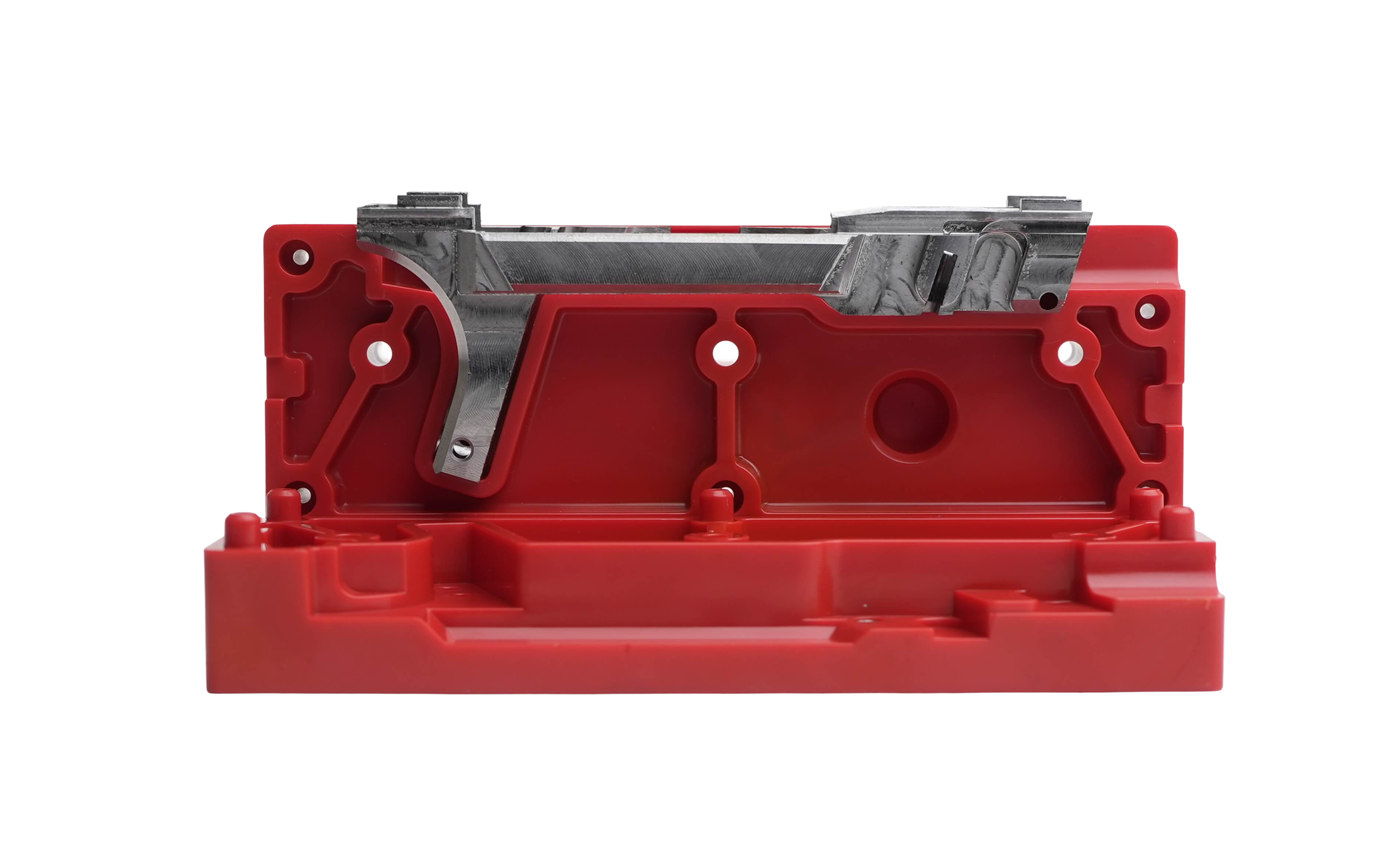
Polymer Jig
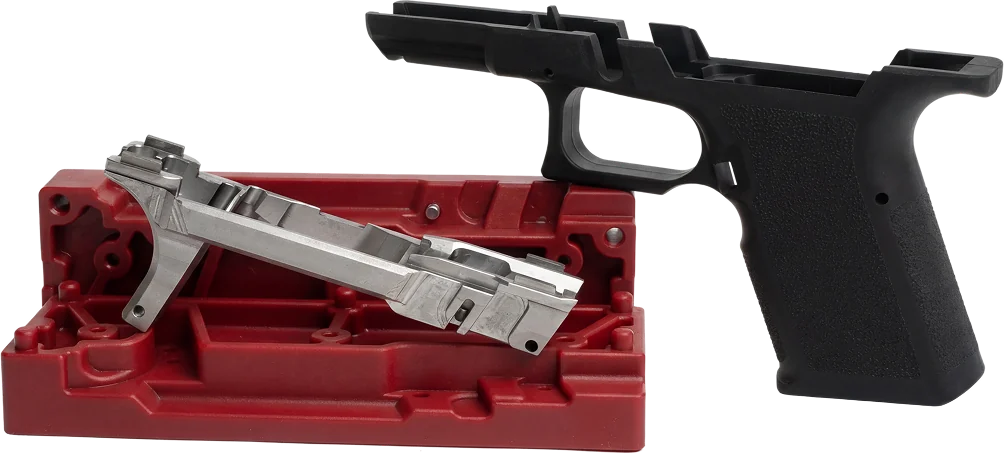
How to finish a G80 Unfinished Receiver using the G80 Polymer Jig, a rotary tool and a hand drill. These are the instructions that ship in the box.
The complete build in about four minutes: mounting the receiver in the jig, taking down the tabs, and drilling the pin holes, in the same order as the written steps on this page.
Watch it once through before you pick up a tool, then keep it open while you work. The steps below go deeper, with part names, bit sizes and a completion check for every cut.
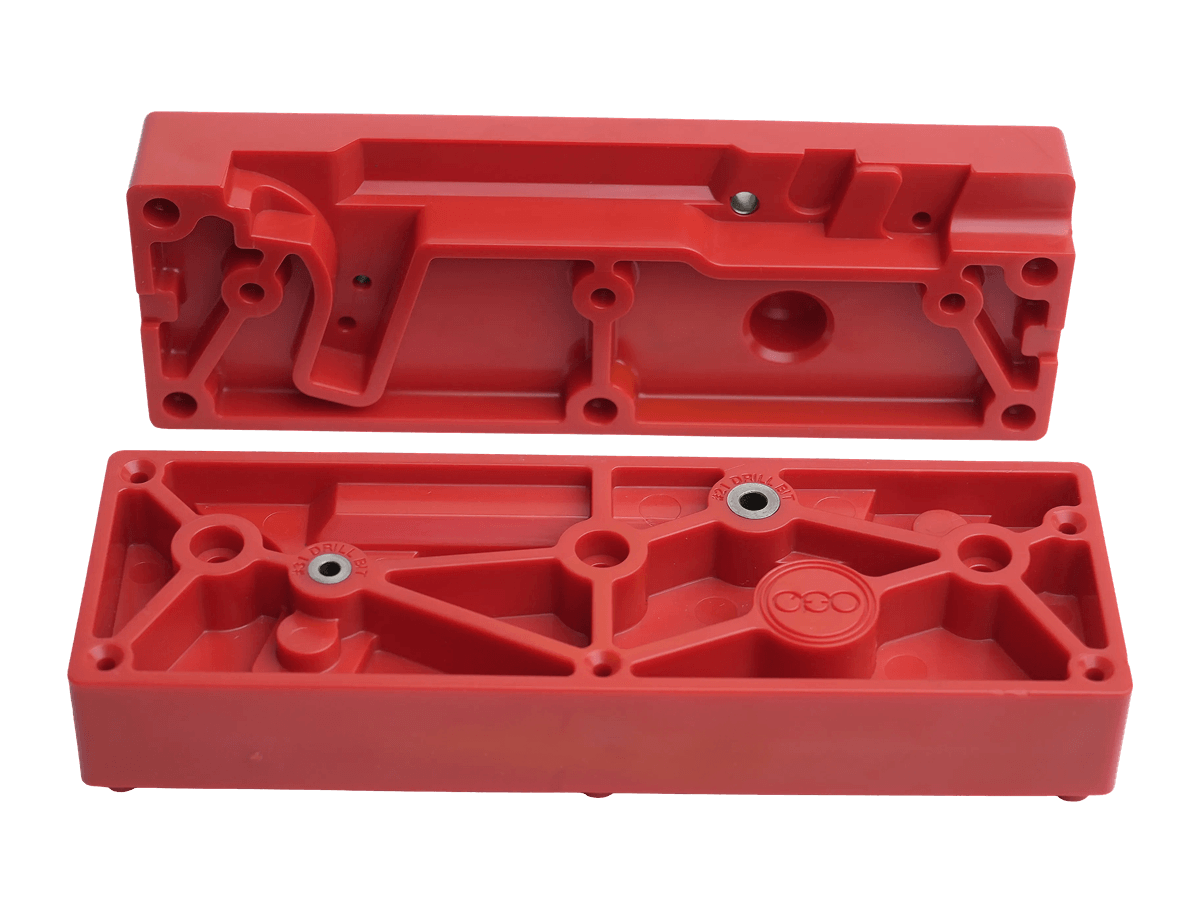
If the jig arrived assembled on a receiver, pull the two bodies off the receiver first. Lay out every piece from the list above so you can see it before you start cutting.


Eye and ear protection on. Set the rotary tool to its high speed setting.
Both tabs come down in the same pass with the same two bits, so they are one step. Take them in order.
This tab is the U-shape at the front of the receiver.
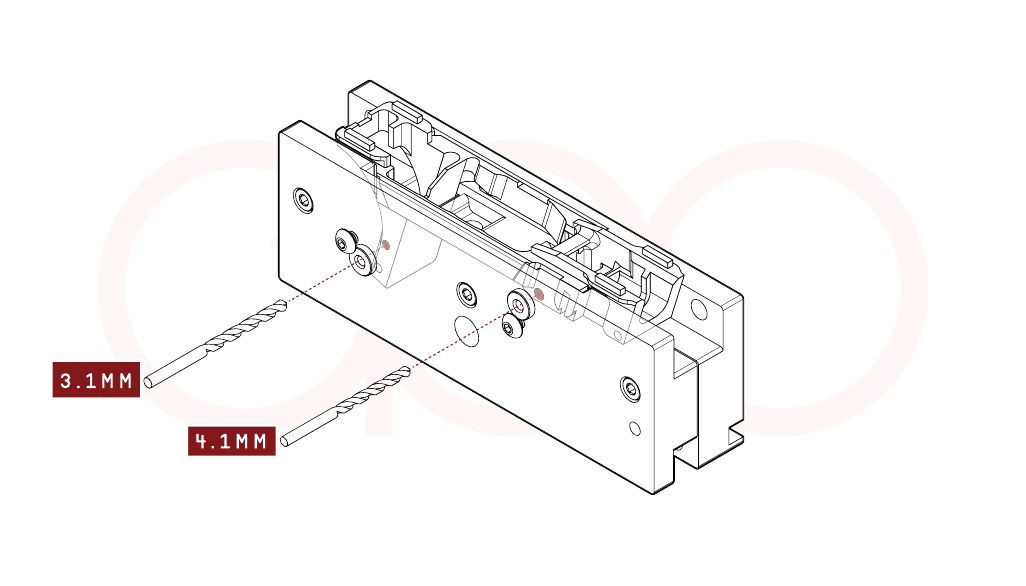
The bushings are marked on the jig. Use the bit that matches the marking. Do the #21 holes first, then the #31 holes.
If the receiver passes those tests, it is ready for the frame parts kit of your choice and a grip module.
The collet is the sleeve inside the rotary tool’s nose that grips the shank of the bit. Rotary tools usually ship with one sized for a 1/8 inch shank. The grinding drum and cone in this kit have a 3mm shank, which that collet cannot hold squarely, so a 3mm collet is in the box. Fitting it is step 03, and it matters: a shank the collet does not grip properly will walk out under load.
Any gun oil or CLP, a dedicated drill and tap lubricant, or WD-40. What matters is keeping the bit wet while it cuts. If you see smoke or hear the bit squeal, stop and add more.
They hold the receiver in place inside the jig and stop it walking while you cut and drill. They go into the receiver’s pre-drilled holes in step 02, before the second jig body goes on.
Move front to back in single passes, working with the direction the drum is turning rather than pushing against it. It is not required, but it usually gives the best result.
No. This is a hand-tool jig. A variable speed, reversible hand drill and a rotary tool are what every step here is written around.
Reverse the tool to back the bit out, then push the bushing back into the jig and tap it home with an armorer’s hammer until it seats securely.
Reversing walks the bit out under power rather than dragging it back through the hole, and it clears the burrs on the way.
Set the receiver upside down on fine grit sandpaper and move it in a circle to knock down the burrs that are left, then test the slide again. It should travel fully to the rear and return to battery.
A Glock OEM or aftermarket G19 Gen 3 frame parts kit and slide kit, plus a grip module.
G80 products are not currently available to persons outside the United States and are not available to residents of and persons in the states of New Jersey and California.